
A finished basement floor coating Twin Cities homeowners love turns a cold, dusty slab into a floor that feels finished, wipes clean, and pairs well with rugs and furniture. It will not heat a basement, but it removes the raw concrete feel that makes lower levels seem damp and unfinished. Drews Industries installs residential concrete coatings for basements in Minneapolis, St. Paul, Bloomington, and across the metro. This guide explains what makes a basement feel cold, what a coating changes, and what to check first.
A basement slab sits on the ground, and the ground stays cool all year. Bare concrete pulls heat from bare feet and gives off a chill that carpet only partly hides. In winter, the walls and the top of the foundation get very cold, and that cold works its way into the room.
The U.S. Department of Energy notes in its guide to foundation insulation in existing homes that foundation heat loss can be significant, and that insulating basement walls brings real comfort benefits. Insulation is the main tool for heat. A finished basement floor coating Twin Cities homes add works alongside it by changing how the surface looks, feels, and cleans.
A coating does not add insulation value to a slab. What it does is seal the dusty surface, brighten the room, and give you a floor that pairs well with area rugs. A coated basement often comes across as warmer and cleaner, mostly because the raw concrete look and the dust are gone.
Every basement needs a moisture check before any finish goes down. The University of Minnesota Extension points to two common sources, groundwater wicking up through tiny pores in the slab and humid summer air turning to condensation on cool walls and floors. Both show up as dampness that people often mistake for leaks.
During the estimate, the crew looks for moisture, cracks, pitting, and old coatings. If a basement has active water problems, those need to be addressed first. A finished basement floor coating Twin Cities homes install should go over a slab that is ready for it, not one that is still fighting water.
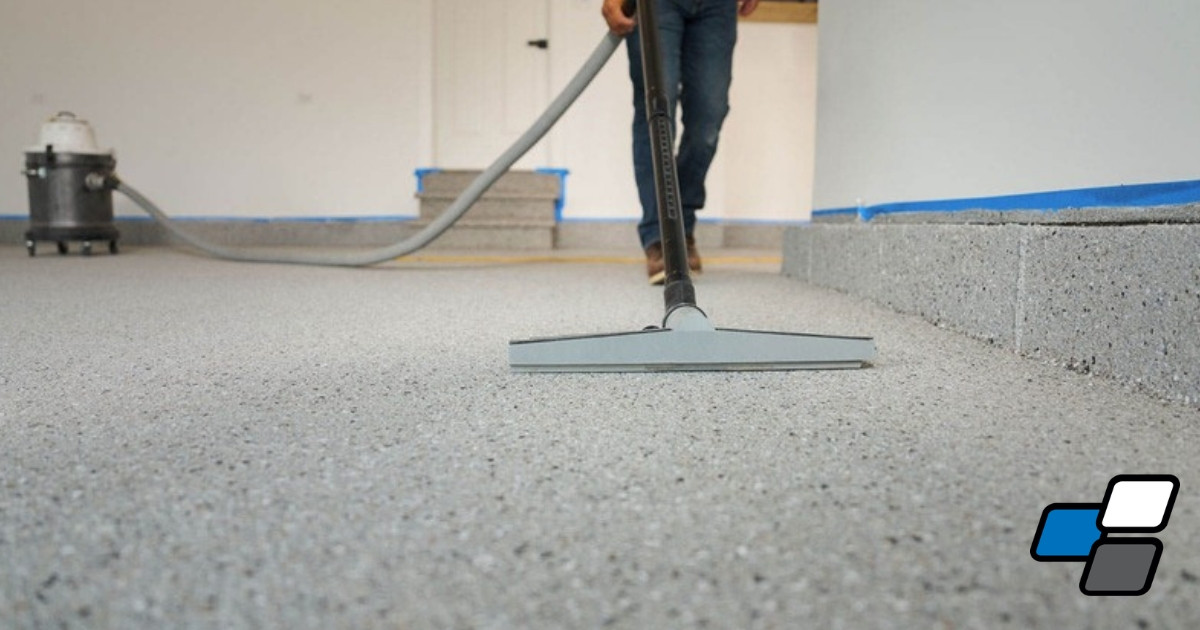
Basement work happens inside the house, so dust control matters. Before grinding begins, protection goes over walls, doors, and nearby finishes, and HEPA rated vacuums collect most of the grinding dust at the source. That grinding gives the primer a rough profile to hold, while patch material levels cracks and pits so they stay hidden under the color.
Basements give you more design freedom than garages. A decorative chip floor brings texture and hides everyday dust. Solid colors give a clean, modern look under sectionals and game tables. A metallic floor adds movement and depth, and Drews lists basements among the spaces where metallic finishes shine.
Light finishes brighten basements that get little daylight. Mid tones hide pet hair and crumbs. Darker floors look dramatic but show dust faster. Choosing the finish around how the room is used, whether it is a family room, home gym, or play area, keeps the floor practical as well as attractive.
Thinking about a basement refresh this winter? Reach us at (763) 972-4010 or book a free basement estimate.
Basements serve many roles in Twin Cities homes. A home gym needs a surface that handles weights on rubber mats and wipes clean after workouts. A playroom needs something easy to clean after crafts and snacks. A home bar or theater benefits from a finish with visual depth. A finished basement floor coating Twin Cities families choose can be matched to each use, and separate zones can share one color family so the level still feels connected.
Many basements have small windows and short winter days. Lighter floor colors reflect more of the light you already have, which makes the room feel bigger. Sheen matters too, since a higher gloss bounces light around the space. Pairing a light floor with warm lighting keeps the room from feeling stark. Samples viewed under your own basement lights give the most accurate picture, because colors shift between daylight and LED fixtures.
Basement styles vary across the metro. Many older homes in Minneapolis and St. Paul have basements with patched slabs, old paint, and low ceilings. Newer homes in Bloomington and the suburbs often have larger lower levels with open layouts. A finished basement floor coating Twin Cities homeowners pick should match the age and condition of the slab.
Older slabs may need more patching and grinding. Newer slabs may have builder sealers that need to come off. Either way, an in person estimate is how the crew sets a realistic plan and price.
A coated floor and an area rug work well together. The rug adds softness and warmth where people sit, and the coating stays easy to clean around it. Felt pads under furniture prevent scuffs. For home gyms, rubber mats sit well on a coated surface and lift off easily for cleaning. That flexibility is part of why a finished basement floor coating Twin Cities homeowners install gets so much use.
A coating is a finish, not a cure for structural or water problems. It will not stop water coming through foundation walls, fix a failed drain tile system, or replace insulation. Cracks that keep moving can show through over time. Those issues belong to other trades, and the estimate is where the crew points them out honestly. Fixing them first protects the investment in the floor and keeps the new surface looking right.
Drews brings decades of Twin Cities concrete experience, and ACI certified foremen lead its crews. The residential system is built in layers, starting with a polyurea primer, then a base coat, then a UV stable polyaspartic topcoat. Most families can walk on the floor within about a day, and the crew lays out the schedule for moving furniture back before it leaves. A lifetime warranty covers the coating for as long as the home stays yours.
Insulation is the main tool for heat, especially on basement walls. A coating does not add insulation value, but it seals dusty concrete, brightens the room, and pairs well with area rugs, so the space feels warmer and more finished. Addressing moisture first also keeps the room from feeling damp and cold.
Moisture has to be checked first. Water can rise through pores in the slab, and summer humidity can condense on cool concrete. If a basement has active water problems, those should be addressed before coating. The crew checks for moisture during the free estimate and explains what the slab needs.
It depends on how the room is used. Decorative chip hides dust and adds texture. Solid colors look clean and modern. Metallic finishes add depth and movement. Light finishes brighten dark basements, while mid tones hide pet hair and crumbs. Samples help you decide in your own lighting.
Before any grinding, the crew covers walls, doors, and finished surfaces and starts the dust collection system. HEPA filtration on the vacuums traps most of the fine particles. The goal is to keep the work inside the project area, and the crew cleans up equipment and debris at the end.
Walking on the new floor is usually fine after about 24 hours, although the product and room conditions can change that. Furniture timing depends on the system, and the crew explains move back and care before leaving. Planning around that window keeps the floor looking its best.
Often. Older slabs in Minneapolis and St. Paul may have old paint, patches, cracks, or pitting. Grinding removes contaminants and old coatings, and patching fills defects so they do not show through. The estimate covers how much prep your slab needs before any finish goes down.
A basement should feel like part of the house, not a storage cave. Checking moisture, preparing the slab properly, and choosing the right finish turns raw concrete into a floor your family will actually use.
Basement estimates from Drews Industries are free. Call (763) 972-4010 or set up your estimate for a finished basement floor coating Twin Cities homes in Minneapolis, St. Paul, and Bloomington will enjoy.