
Floor Systems Explained
Choosing a floor from a photo is how people end up with the wrong system. This guide lays out each coating type we install, what it does well, and where it fits, so your estimate starts with better questions.
Concrete floor coatings come in four main looks. You can pick decorative chip, metallic, solid color, or quartz, and each one sits on epoxy or polyaspartic resin. Chip fits most garages. Metallic fits basements and showrooms, solid color fits shops, and quartz fits wet commercial floors.
Most people pick a floor coating by scrolling photos until one looks good. That works for color. It does not tell you if the system can handle a garage full of February slush or a basement that stays damp in spring.
Drews Industries installs every system on this page for homes and businesses across the Twin Cities. During your free estimate, we look at your slab and narrow the list together.
Not sure which floor type fits? Tell us about the room, and we will bring samples of the best matches.
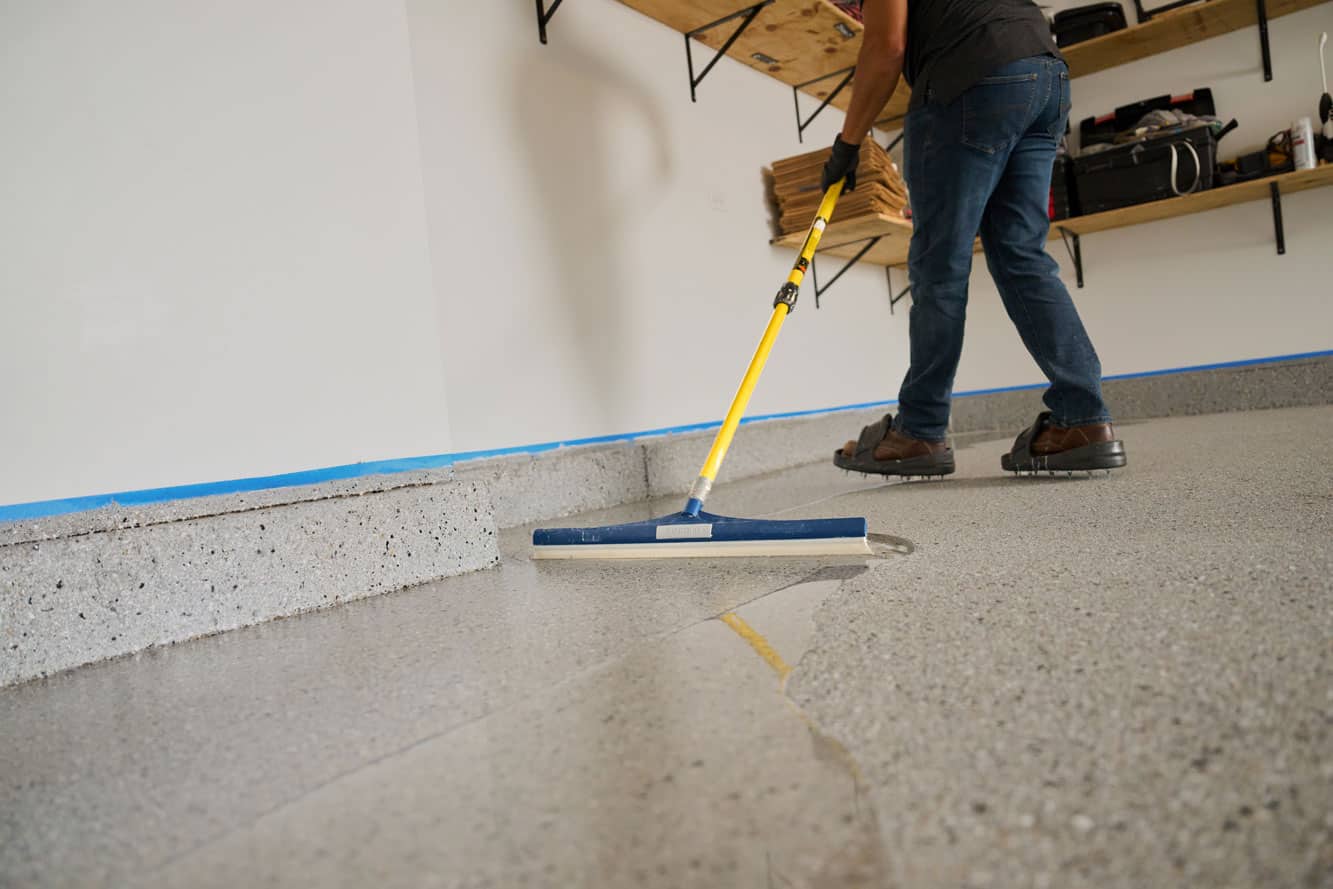
Styles change from floor to floor, but the build underneath follows the same order every time.
For homes, we use a polyurea primer, a base coat, and a polyaspartic topcoat. For businesses, we choose between high-strength epoxy and polyaspartic layers based on traffic and chemicals.
Decorative chips are our most popular floor system. We broadcast vinyl chips by hand into the base coat, then scrape, vacuum, and seal them. The result is a textured, slip-resistant floor that hides dust, tire marks, and small scuffs.
Chip blends come in three groups. The Standard collection offers quarter-inch and eighth-inch chips. The Marble collection has stone tones, and the UV collection suits outdoor slabs. Layers, blends, and care tips live on our epoxy flake flooring page.
A metallic epoxy floor uses pigments that swirl and catch light, so no two floors look alike. Homeowners pick it for finished basements and bars, and businesses pick it for showrooms. Because the surface is glassy, wet areas may need added texture in the topcoat.
Solid color epoxy flooring gives a clean, even look for garages, shops, and warehouses. It shows more dust than chip, so it works best where someone sweeps on a schedule. In return, it reflects light well and pairs nicely with striping.

A few quick floor pairings help most owners narrow the choice before we arrive.
Chips under a UV-stable topcoat suit a garage that sees salt all winter. The pattern hides brine film and sand, and the texture grips wet boots.
Metallic gives a basement bar or media room depth and shine under dim lights. Chip works well in family rooms and laundry areas on the same level.
Solid color with safety striping keeps a workshop clean and organized. Dropped parts, screws, and spills stand out against a single tone, so you find them fast.
Quartz with added grit suits a busy restaurant kitchen. The texture holds footing during washdowns, resists harsh cleaners, and stays easy to squeegee toward the drain.
Quartz floor systems handle hard work. Colored quartz granules add grit, grip, and chemical resistance. That makes them a strong fit for kitchens, locker rooms, and wet work floors. Our decorative concrete coatings page compares chip, metallic, and quartz looks side by side.
Two resins do most of the work across these floor styles. Each has a job. Epoxy builds a hard, chemical-resistant layer. It is a common choice for an epoxy floor coating in high-traffic commercial spaces. Polyaspartic stays UV-stable and flexible, which is why we use it as the topcoat on home garage floors, sunny patios, and pool decks across the metro.
Want the details? Read our epoxy flooring and polyaspartic flooring pages.
Daily care stays simple across every system. Sweep, and mop now and then with gentle soap. None of these floors need wax or yearly resealing.
The right floor depends on your slab as much as your taste. We install every system on this page, so our advice is not tied to selling one product.
Chip, metallic, solid color, and quartz are all part of our work. We recommend the one that fits your room, even when it is the lower cost option.
Moisture, cracks, and old sealers rule out some systems before color ever comes up. We check all three first and explain the tradeoffs in plain language.
Flatwork is part of our trade. If a slab needs repair or replacement before coating, our crews handle it under the same plan. You never juggle two contractors.
Decorative chip is the most popular floor coating by a wide margin. It forgives dirt, salt film, and tire marks in busy garages, and the texture adds grip when the floor is wet. Chip also comes in the most color choices, from Standard and Marble blends to UV blends made for outdoor slabs.
Metallic floors are smoother than chip floors, so they can feel slick when wet. In dry rooms like basement bars and showrooms, that is rarely a problem. For areas near doors, sinks, or laundry machines, we can add fine texture to the topcoat to improve grip while keeping most of the shine.
Yes, with the right system. Our UV collection of chips handles sun and weather when we seal it under a UV-stable polyaspartic topcoat. Metallic and solid color finishes stay indoors. Patios, pool decks, and driveways all get the outdoor system, which keeps the color from yellowing or fading.
Standard epoxy can yellow in sunlight, which shows near an open garage door. For homes, we build with a polyurea primer and a polyaspartic topcoat that stays color-stable and flexes in Minnesota cold. You still get the hard, glossy look people mean when they say epoxy, without the yellowing.
Yes, once we grind the old paint off. Paint sits on top of the concrete and peels, so a coating bonded to it would fail along with it. Our grinders take the slab down to raw concrete, which gives the primer a clean surface to soak into and grip.
The right floor depends on your slab and your plans for the space. We will check moisture and condition, then match concrete floor coatings to the way you use the room. Call our Delano office at (763) 972-4010, or start with our residential concrete coatings and commercial concrete coatings.