
Distribution and Storage Floors
Forklift tires, dragged pallets, and dust that never settles wear down a warehouse slab fast. We install high-strength epoxy systems with striping and grit, so your aisles stay clean, marked, and ready for the next shift.
Warehouse floor coatings seal the slab under a hard epoxy layer. That layer stops concrete dust, resists forklift wear, and holds striping far longer than paint. Most facilities can stay open while we coat the building one zone at a time.
A loaded forklift puts thousands of pounds on four small tires. Concrete feels every trip. Multiply that by hundreds of trips a day, and bare concrete breaks down. Joints chip, the surface dusts, and painted aisle lines fade into gray.
Our coating crews leave the Johnson Drive shop in Delano for distribution centers across the metro. Shakopee, Brooklyn Park, Coon Rapids, and Maple Grove are all on our regular route.
Share your square footage and racking layout. We will plan coating phases around your freight schedule.
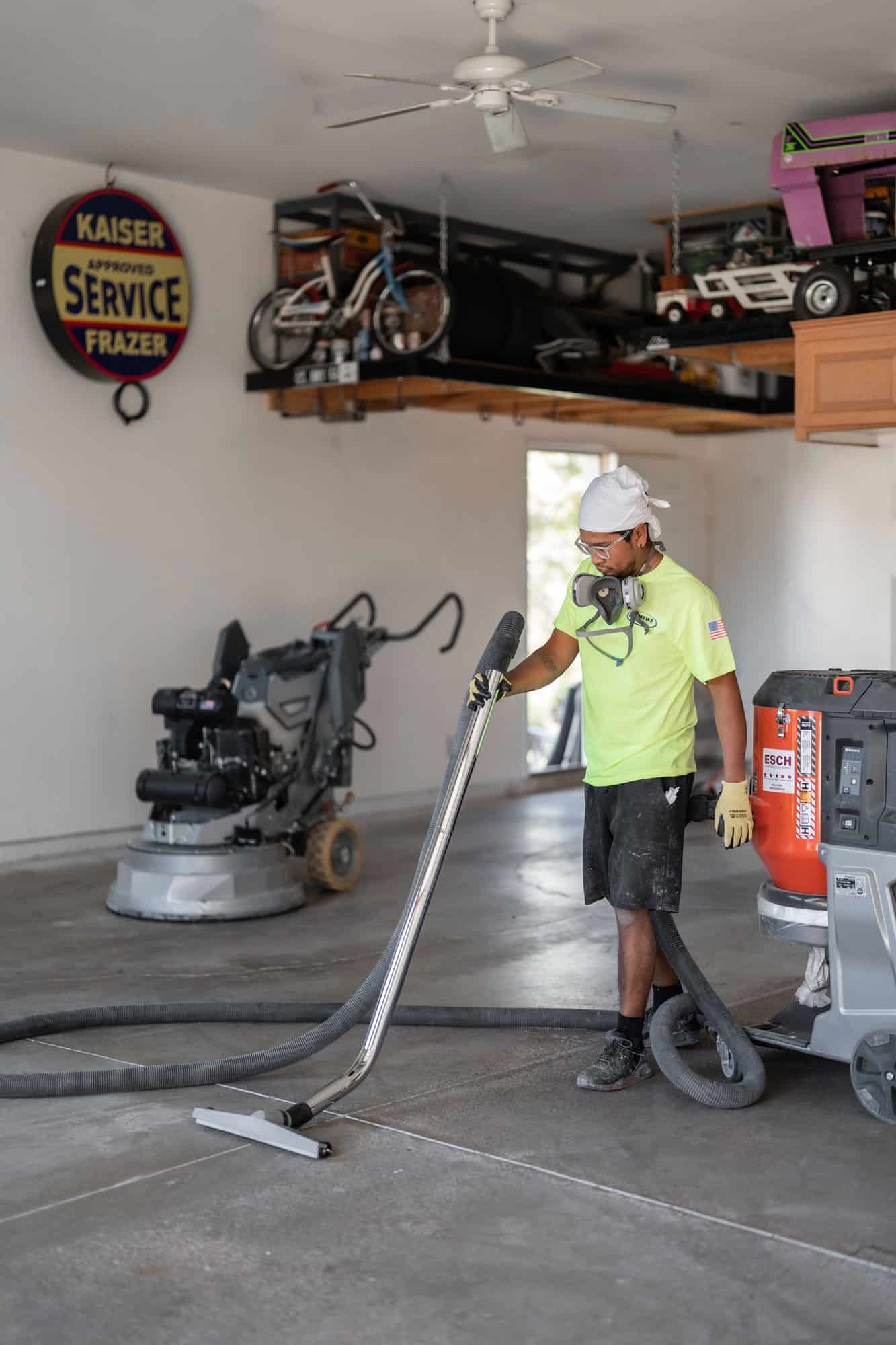
Raw concrete sheds fine dust every time a wheel rolls across it. It never stops. That dust coats stock, clogs equipment filters, and drifts onto shelving. Staff then spend hours cleaning surfaces that will be dusty again by morning.
Unsealed slabs also absorb almost anything that lands on them.
Stains spread across the aisle, and the concrete weakens wherever moisture sits for days at a time under pallets and racking. A sealed coating ends both problems, so your team maintains the floor instead of fighting it.
For busy buildings, we use high-strength epoxy. It works. It cures into a dense, thick layer that handles rolling loads and resists common shipping chemicals. As a warehouse epoxy flooring system, it gives you a body tough enough for daily pallet traffic.
Where dock doors let daylight in, we finish the epoxy with a UV-stable polyaspartic topcoat. That keeps the color even from the doors back to the racks. For the roughest zones, a quartz broadcast adds strength and texture.
A coated floor also brightens the building. It bounces overhead light back up between the racks, so pickers read labels faster and drivers see debris sooner.
Painted lines on bare concrete wear off fast. Months, not years. Lines built into a coating last far longer, because the clear topcoat protects them. Forklift lanes, walkways, and staging boxes can all go into the system.
Color zones can split receiving from shipping. They can also mark hazard areas around docks and battery chargers, so new hires learn the layout of the building on their first day. We add grit where footing matters most, so a wet boot in February does not end in a fall.
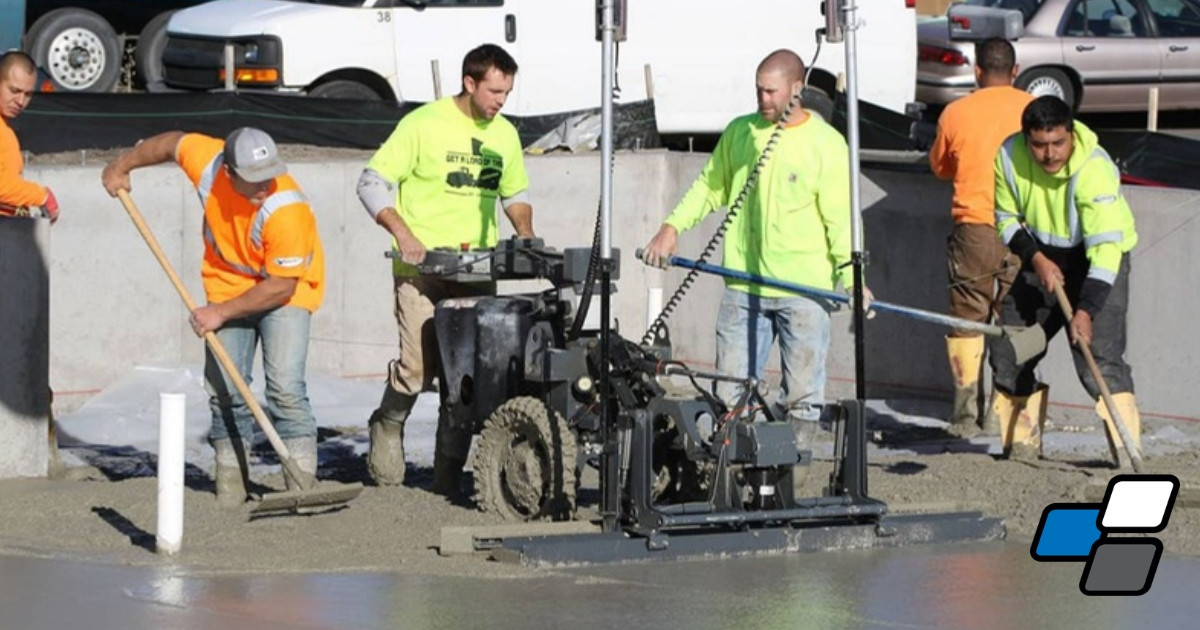
Warehouses never fully stop. Our plan works aisle by aisle, so freight keeps moving while each section gets its new floor. Your shipping and receiving teams always know which aisles are open.
We watch how forklifts and pallet jacks move through the building. Main travel lanes and turning spots get the toughest system and the most joint repair. Corners take a beating.
Broken joint edges chip coatings and jar loads. Our crew cuts out spalled joints and refills them, so wheels roll smoothly over the new floor.
Aisle lines, walkways, and staging boxes go down before the topcoat. That keeps them sealed under the clear layer instead of wearing off like painted lines.
Each aisle bank returns on the date in your plan. Stock moves back. Then the next section closes, and the crew keeps rolling through the building until the last aisle bank has its finished coating. Your team never loses more than one block of racking at a time.
Most warehouses choose a solid color finish. It reads clean and professional, and it makes spills, debris, and dropped parts easy to spot. Safety yellow lines and colored staging boxes stand out sharp against a gray or tan base. See past single-tone floors in our gallery.
A warehouse floor carries pallets, racking, and forklifts every shift. Managers hire us because we plan around freight first and coatings second. Every quote starts with a walk of the building during a working shift.
Many quotes skip joint work, then the coating chips at every seam. Our estimate includes joint and crack repair. The price you sign is the floor you get.
We look at pallet weights, forklift traffic, and the cleaners your team uses. Then we pick the coating build that handles those loads instead of a single package for every building.
Safety lines sealed under the topcoat stay bright for years. Your team stops repainting aisles every season, and drivers, pickers, and visitors can all read the traffic plan on the floor at a glance.
Yes, high-strength epoxy handles daily forklift and pallet jack traffic. The key is prep. We grind the slab to open concrete and rebuild damaged joints, so the coating bonds deep and stays put under rolling loads. Hard wheels and heavy turns wear any floor over time, but a fresh topcoat can renew busy lanes later.
No, most warehouses stay open during the work. We split the building into zones and coat one or two at a time while freight moves through the rest. Some racking can stay in place. Your plan lists each zone, the cure time, and the date it returns to service before we start.
Striping built into a coating lasts much longer than paint on bare concrete. We lay the lines before the final topcoat, so a clear layer shields them from tires and boots. Painted lines on raw concrete sit on top and scrape away within months in busy aisles, which is why most clients switch.
Old paint lines are not a problem, because we grind them off during prep. Coatings bond best to clean, open concrete, so paint, sealer, tire marks, and rack glue all come up first. Removal is part of every estimate, and the new lines go exactly where your layout needs them.
Daily sweeping or an auto scrubber with a neutral cleaner keeps the floor in good shape. Walk-off mats at dock doors catch winter grit before it spreads into the aisles. Skip harsh solvents, which can dull the finish. Clean spills when they happen, before a forklift spreads them across an aisle.
Your warehouse runs on speed, safety, and clean stock, and the right floor supports all three. We will visit your building, check the slab, and recommend warehouse floor coatings that fit your freight and schedule. Call (763) 972-4010, or compare all of our commercial concrete coatings.