
Our Most Popular Floor System
A flake floor looks simple from above. Underneath sit a primer, a colored base, thousands of hand-broadcast chips, and a clear topcoat. Get those layers right, and the floor handles salt, spills, and daily traffic.
Epoxy flake flooring is a layered coating with colored vinyl chips broadcast into the base. It hides dirt, adds grip, and seals the concrete under a clear topcoat. It is the most popular choice for garages because it forgives salt film, sand, and tire marks between cleanings.
Most of the floor is invisible to you, since the layers that do the real work sit under the chips and the clear topcoat where nobody ever looks. What you see is a speckled surface in your chosen colors. What does the work is the stack beneath it, plus the prep that happened before the first coat went down.
Our crews have laid flake systems in garages from Delano east into Plymouth, Maple Grove, and Minnetonka, and the same floor works in shops, basements, and mudrooms across the metro.
Tell us the size of your garage or room. We will bring chip blends you can lay on your own floor.

A smooth, one-color floor shows everything. Every grain. Salt rings, sand, and dried slush stand out against it. An epoxy flake garage floor breaks up the surface with dozens of tiny colors.
That chip pattern pays off every winter.
For entries and steps, we can add extra grit to the topcoat if you want more traction.
Our crew grinds the concrete with professional equipment first. Grinding strips the smooth top film and opens the pores, which gives the primer something to bond into. A HEPA vacuum pass follows, then we fill cracks and pitted spots.
On home floors, a polyurea primer soaks into the prepared slab, and a colored base coat follows. The base color shows through the gaps between chips, so we pick it to suit your blend.
While the base is still wet, our crew tosses flakes by hand across the entire floor. Full coverage means the base disappears under a dense layer of chips. That density gives the floor its even look and helps hide wear for years.
After the base cures, the crew scrapes off loose edges and vacuums. Then a clear polyaspartic topcoat seals the chips in place. It stays color-stable in sunlight and flexes as temperatures swing from July to January.
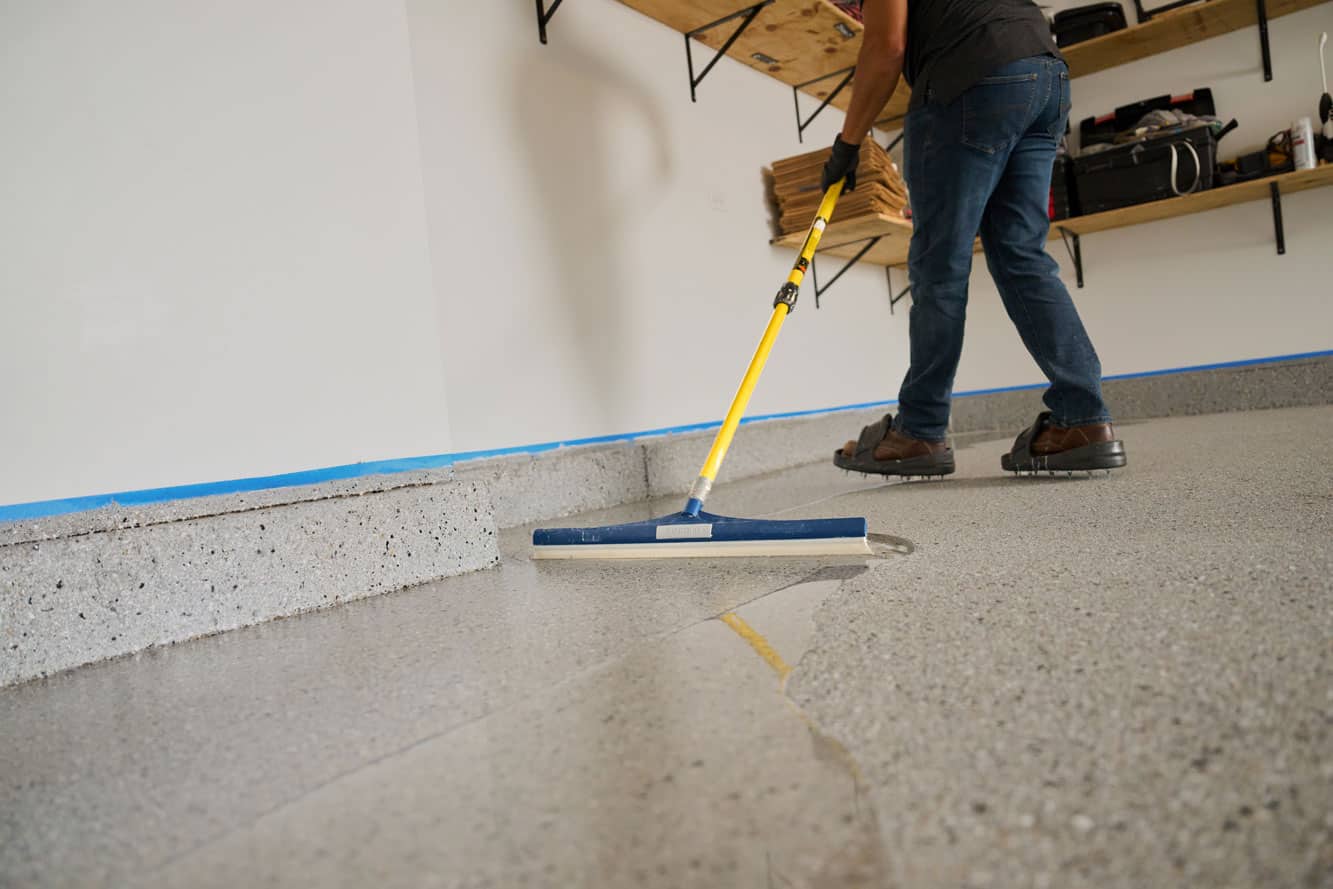
The floor care routine is simple, and it changes a little with each Minnesota season.
Push slush out with a floor squeegee after storms. Rinse heavy salt every few weeks so it does not dry into a white film.
One good wash with warm water and mild soap clears the winter grit from the chip texture. A soft broom finishes the job in a few minutes.
Leave the door open on long summer days without worry. The UV-stable topcoat holds its color in direct light, so the strip near the door never yellows.
Make sure the garage door seal closes tight before cold returns. No wax and no yearly resealing are on the list.
The Standard collection offers quarter-inch and eighth-inch chips. Blends include Frostbite, Brickyard, Summit, SKOL, Dovetail, and Coyote. The Marble collection leans toward soft stone shades such as Weathered Gray, Sycamore, and Carbon. Larger chips read bold. Smaller chips read fine and even.
Bare concrete dusts, stains, and soaks up brine. Paint fails too. Garage floor paint looks fresh for a season, then peels where tires sit. A full flake floor is a bonded, multi-layer coating system, which puts it in a different class from both.
Compared with a solid color or metallic finish, flake is the most forgiving choice for a working garage. Metallic floors shine in basements and showrooms, while solid colors suit shops. Our epoxy flooring page explains the resin side in more detail.
A flake floor is only as even as the hands that broadcast it. Our crews take the extra time to get full coverage across every square foot.
We broadcast chips until they hide the whole base, never a light sprinkle. That density gives the floor its even look and helps hide salt and dust.
Chip colors look different under garage lights than on a screen. We bring samples so you see each blend against your walls and doors. It is the easiest way to avoid a color you regret.
Many Minnesota home builders trust us with their concrete. That same care goes into reading and repairing your slab before the first chip falls. Every crack gets filled before coating.
Walking on a new flake floor the next day is normal for most homes. Parking waits a few more days while the topcoat hardens all the way through. Your crew lead sets the exact date before leaving, based on your slab and the temperature that week, and leaves written care tips too.
The flake floor coating resists road salt, chemicals, and moisture, so brine stays on top of the sealed surface. It cannot soak into the concrete or freeze inside it. Pushing puddles out after storms and rinsing every few weeks keeps a white salt haze from drying on the chips.
No, the clear topcoat smooths over the chips and leaves only a light texture. That texture grips shoes and tires without feeling sharp under bare feet. If you want more traction near steps or a house entry, we can add fine grit to the topcoat in just those spots.
Yes, grinding takes off failing paint and old coatings before we start. Paint never truly bonds to concrete, so a new floor laid over it would peel along with it. Our grinders take the slab down to clean concrete, and removal is part of your written estimate from the start.
Yes, flake floors work well in basements. They handle laundry spills, workout gear, and storage bins, and the pattern keeps the space looking clean. Many owners pick a Marble collection blend for a softer look downstairs. We check the slab for moisture before we recommend any basement coating.
A good flake floor feels like an upgrade every time you open the garage door. We will check your slab, help you choose a blend, and install epoxy flake flooring made for Minnesota winters. Call (763) 972-4010 for a free estimate, or compare systems in our concrete floor coatings guide.