
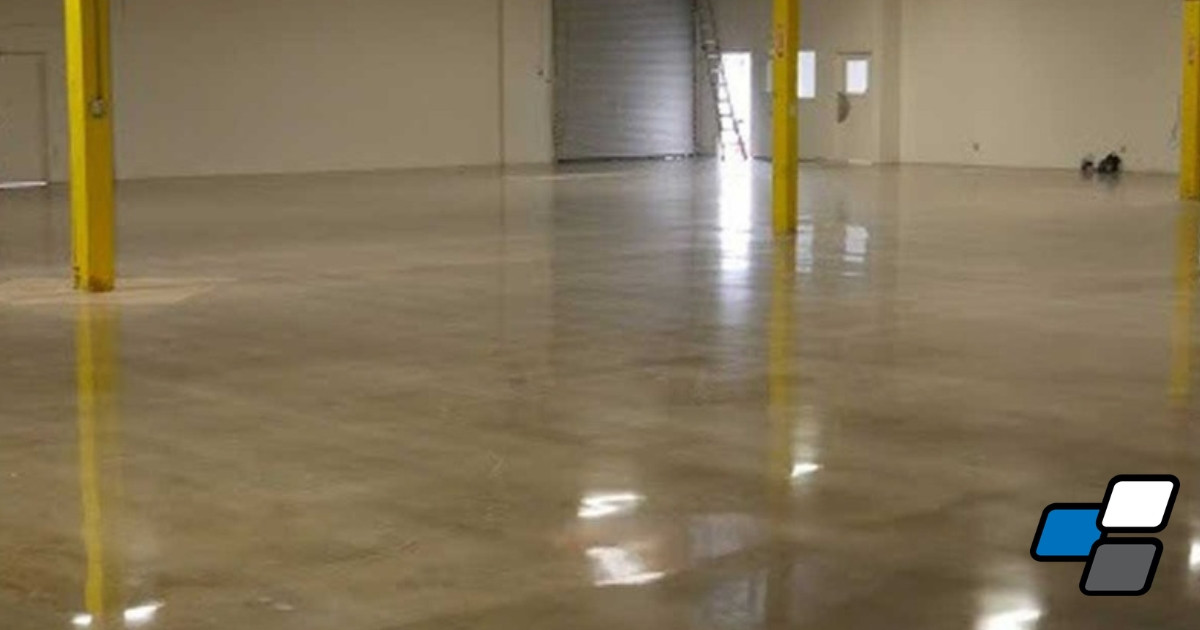
A commercial floor coating Minneapolis retailers and office managers can rely on has to look professional, handle months of salt and slush, and keep customers and staff on their feet. It also has to go down without shutting the business for long. Drews Industries installs commercial concrete coatings for businesses in Minneapolis, St. Paul, Bloomington, and surrounding communities. This guide is written for owners and facility managers comparing options for retail floors, offices, and similar spaces.
Every customer who walks in from a Minneapolis sidewalk in January brings snow, slush, and salt with them. That mix lands in the first few feet inside the door, then spreads across the floor on shoes and carts. Salt residue dulls finishes, slush makes entries slippery, and grit scratches softer floors.
Sidewalk salt is a big part of the picture. The Minnesota Pollution Control Agency Smart Salting training is aimed at property managers and winter maintenance crews, and the agency says participating organizations have cut their salt use by 30 to 70 percent. Less salt outside means less residue inside, but some will always reach the floor. A sealed coating keeps that residue on the surface, where nightly cleaning can remove it.
Retail floors see constant traffic, display moves, and carts. Office floors take rolling chairs, carts, and steady walking paths. Over time, those patterns wear through weak finishes. A commercial floor coating Minneapolis businesses install should be chosen for the traffic level of each space, not just the look.
Slip resistance is a priority wherever slush comes in. Drews offers grit added safety coatings for commercial spaces, which add traction where floors get wet. Federal workplace rules point the same way. OSHA standards for walking and working surfaces call for floors in workrooms to stay clean and as dry as feasible, and for walking surfaces to stay clear of hazards that include spills, snow, and ice.
Entry mats, regular cleanup, and a textured coating work together. Our post on how commercial concrete coatings improve safety and productivity covers more of the safety side for business owners.
Drews uses a multi layer coating system chosen for each industry. For commercial work, the company installs epoxy systems and grit added safety coatings, with options for safety striping, color zones, and branded floor logos. The right build depends on traffic, cleaning methods, chemicals, and the look the business wants.
Retail spaces often want a floor that reinforces the brand. A metallic finish creates a high end showroom look. For entries and break rooms, a quartz floor adds the slip resistance Drews highlights for that system. Solid colors give offices a clean, neutral base, and custom logos can mark a lobby or entrance.
Decorative chip works well in back rooms, stockrooms, and service areas where grime needs to be hidden. Many businesses combine finishes, such as a textured entry zone, a decorative sales floor, and a practical back of house.
| Space | Typical Priority | Common Finish |
|---|---|---|
| Entry and vestibule | Traction in slush | Quartz or grit added coating |
| Retail sales floor | Look and durability | Metallic, solid color, or chip |
| Office and lobby | Clean, professional look | Solid color or metallic |
| Stockroom and back of house | Hiding grime, easy cleaning | Decorative chip or solid color |
| Break room | Cleanability and grip | Quartz or chip |
Color and sheen change how a space feels. Light gray and white floors brighten offices with limited windows. Darker solids and metallics give retail spaces a premium look under accent lighting. Brand colors can show up in logos, borders, or color zones. A commercial floor coating Minneapolis businesses design with branding in mind becomes part of the customer experience, not just a surface to walk on.
Want to plan a floor around your hours? Call (763) 972-4010 or talk with us about scheduling.
Many businesses replace worn vinyl tile, ceramic tile, or carpet with a coated floor. Tile grout collects salt residue and dirt, vinyl tile needs regular stripping and waxing, and carpet near entries soaks up slush. A seamless coating removes grout lines and joints, cleans with a mop, and does not hold moisture the way carpet does.
The right choice still depends on the space. Offices that want sound absorption may keep carpet in some areas and coat the entries, corridors, and break rooms. A commercial floor coating Minneapolis managers use in high traffic zones often pairs well with softer flooring in quiet areas.
Retail fixtures, shelving, and displays need to move before work starts and return afterward. Planning the layout ahead of time helps decide where logos, color zones, or striping should go. Some businesses use the project as a chance to refresh the store layout, adding new fixture positions, wayfinding colors, or a branded entry mat zone that guides customers inside. A clear move out and move back plan keeps the closure short and avoids scuffing the new finish.
Many commercial spaces sit on old tile, worn coatings, or bare concrete with years of stains. Grinding takes the surface down past that history, and damaged sections are repaired before any coating goes down. Drews notes that proper prep prevents the failures common with low grade or DIY coatings, which is why grinding is never skipped. A commercial floor coating Minneapolis property owners can rely on starts with that prep.
Moisture, existing adhesives, and slab condition all shape the plan. An on site estimate covers those factors along with traffic patterns and schedules before a price is set.
Downtime costs money, so Drews aims for minimal disruption to operations. Projects are tailored to traffic level and schedule, and cure times vary by coating type and square footage. Some spaces can be done in sections so part of the business stays open, while others fit inside a planned closure or a weekend.
Good communication keeps the job smooth. Managers should tell employees which zones are off limits, when the loading area reopens, and when shelving and fixtures can return. A clear plan before work starts avoids surprises on reopening day.
Daily care keeps a coated floor looking professional. Sweep or dust mop grit, especially near entries in winter. Use a mop and a cleaner that is safe for the topcoat, and clear salt film often so it never builds into a crust. Entry mats catch most of the slush before it spreads. A commercial floor coating Minneapolis managers maintain this way stays bright and safe for years, even through the longest winters.
Each part of the metro brings different spaces. Downtown Minneapolis shops are frequently in older buildings, where slabs can be uneven and buried under several generations of flooring. St. Paul offices may want a clean, neutral look that suits historic interiors. Bloomington retail and showroom spaces near major corridors may lean toward bold finishes that catch the eye of shoppers. A commercial floor coating Minneapolis area businesses choose should fit the building and the brand.
Drews Industries has decades of Twin Cities concrete work behind it, and ACI certified foremen lead the commercial crews. The company serves warehouses, retail spaces and showrooms, restaurants, auto shops, manufacturing facilities, and fire stations and municipal buildings. That range of experience helps the crew recommend a system that fits each business rather than a one size solution.
Drews Industries installs commercial concrete coatings for retail spaces, offices, showrooms, and other businesses across Minneapolis, St. Paul, Bloomington, and the Twin Cities. Each project starts with grinding and patching, followed by a multi layer system chosen for the traffic, cleaning methods, and look the business needs.
Yes. A sealed coating keeps salt residue and slush on the surface, where regular cleaning can remove it, instead of letting it soak into concrete. Grit added safety coatings improve traction in entries. Entry mats and frequent cleanup in winter keep the floor safe and looking professional.
It depends on the space, the system, and the square footage. Drews aims for minimal disruption and tailors projects to traffic level and schedule. Some spaces can be done in sections or during a planned closure. Cure times vary by coating type, and the crew gives clear timing before work starts.
Yes. Drews offers branded floor logos, safety markings, functional striping, and color zones as part of its commercial work. Logos can mark entries or lobbies, while striping suits warehouses, fire stations, and back of house areas. These options are planned during the estimate so they fit the layout.
It depends on the brand and traffic. Metallic finishes create a high end showroom look, solid colors give a clean neutral base, and decorative chip hides grime in busy areas. Quartz or grit added coatings suit entries where slush comes in. Many stores combine finishes by zone.
Most failures trace back to poor preparation. Drews says proper prep prevents the failures that are common with low grade or DIY coatings. Grinding removes contaminants and opens the concrete so the coating bonds properly, and patching repairs cracks and damage before any system goes down.
A commercial floor shapes first impressions, safety, and cleaning costs. Pairing the correct system with thorough prep and a schedule built around business hours gives a tired floor many more Minnesota winters of service.
Getting a commercial quote from Drews Industries costs nothing. Call (763) 972-4010 or arrange a walkthrough of your space for a commercial floor coating Minneapolis, St. Paul, and Bloomington businesses can count on.