
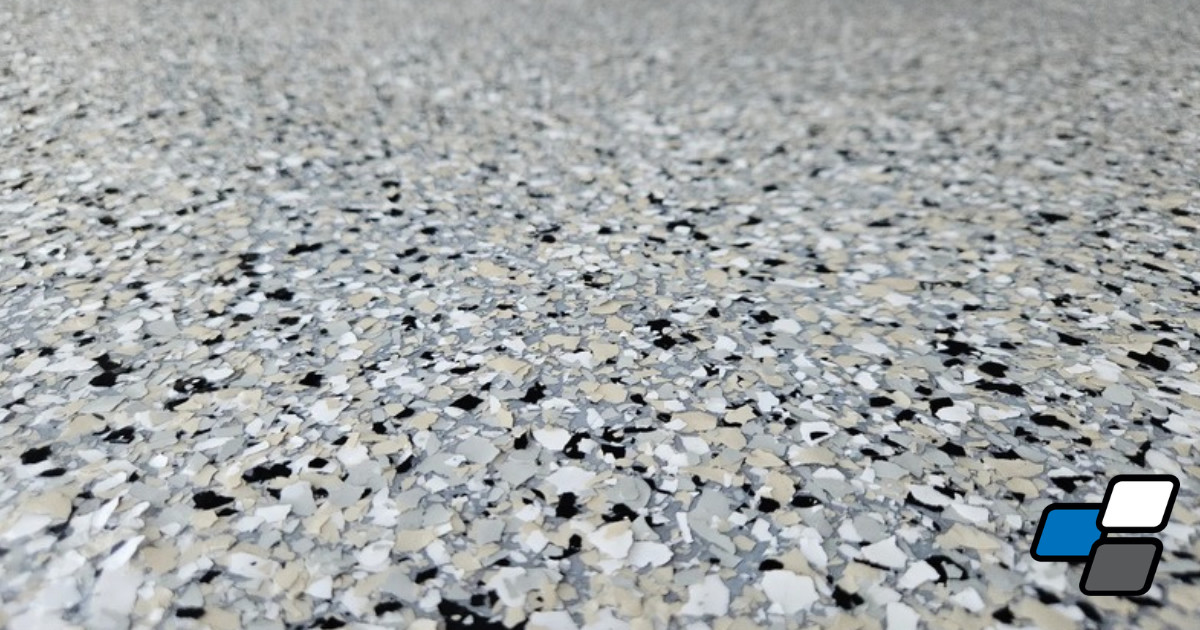
A quartz floor Minnesota mudroom owners pick is a coated concrete floor. Colored quartz sand gets locked into the resin and sealed under a clear topcoat. The sand gives real grip under wet boots. The sealed surface keeps salt and slush on top where you can wipe it away. Drews Industries installs quartz floor coatings for concrete entries across the Twin Cities.
The mudroom takes more abuse than any room in a Minnesota house. Snow melts off boots. Salt crystals grind into the floor. Kids drop hockey bags and backpacks in a heap. Dogs shake off after a walk. A floor in that spot needs to stay safe when wet and clean up fast. Quartz checks both boxes.
Quartz is a broadcast system. The crew rolls out a resin base coat, then throws colored quartz sand by hand into the wet resin. The sand sinks in and locks down as the base cures.
Once it hardens, the crew scrapes and vacuums the loose sand. A clear, UV stable topcoat goes over the top. The topcoat seals the sand in place and leaves a fine texture you can feel under your socks.
That texture is the point. Smooth coatings can get slick when water pools on them. Quartz grains stick up just enough to give your feet something to hold. You still get a sealed floor that wipes clean.
Our quartz line is Citadel Quartz. It comes in ten colors, from Slate and Black Granite to Sandalwood, Desert Sand and Caramel. Darker blends hide salt film. Lighter blends brighten a small room with little natural light.
Wet floors cause falls. The CDC reports that 1 in 4 older adults fall every year, and falls are the leading cause of injury for adults 65 and older. Grandparents visit. Kids run in from the bus. A mudroom floor should be the safest floor in the house, not the slickest.
Snow turns to water in seconds on a warm floor. Add a puddle of slush and a pair of socks, and you have a hazard. Tile gets slick. Sealed concrete with no texture gets slick too.
A quartz broadcast floor keeps its grip when wet. That makes it a strong pick for the step down from the garage, the back door and the landing at the bottom of the stairs. Want even more bite on the busiest path? Ask about added grit during the estimate.
Road salt does not stay on the road. It rides in on tires, boots and dog paws. Then it dries into a white crust on whatever floor it lands on.
On bare concrete, salt water soaks into the pores. Each freeze pushes the surface apart a little more. Inside a heated house, the slab may not freeze. But salt still stains, etches and leaves a gritty film that scratches softer floors.
A sealed quartz floor keeps that mix on top. Wipe it, mop it and move on. No grout lines trap salt. No soft finish wears down under grit.
Salt is a problem outdoors too. The MPCA points out that chloride from salt builds up in lakes, streams and groundwater and stays there for good. Wiping up salty slush inside means less of it washes back out. A good boot tray and a sealed floor work as a team.
It all begins with a free estimate. A team member checks the concrete, talks through how the room gets used and shows you color options. A detailed written estimate follows the visit.
On install day, the crew protects the space first. Doors, trim and nearby walls get masked. Then we grind the concrete with HEPA filtered, dust controlled vacuums. Grinding opens the surface so the base coat can bond. It also removes old paint or sealer.
Repairs come next for cracks, pits and spalled spots. Then the base coat goes down and the quartz goes in by hand. After the base cures, we scrape, vacuum and apply the UV stable topcoat.
Socks and slippers are usually fine within a day. Your crew explains when the room is ready for full use and how to care for the new floor.
Quartz goes over concrete. That covers a lot of Minnesota mudrooms. Garage entries, lower level walkout doors and basement landings usually sit right on the slab. Many split level and rambler homes have a back entry poured as part of the foundation.
If your mudroom sits over a wood subfloor, bring it up during the estimate. We will look at what is there and tell you plainly what makes sense.
Size is rarely a problem. A small entry and a long hallway drop zone both work. Quartz can also run into a connected laundry room or half bath, so the whole back of the house matches.
Already have a coated garage? Matching the mudroom to it creates one clean path from the car to the kitchen. A garage floor coating and a quartz entry pair well.
Tile is the default in many entries. It looks fine on day one. Then grout lines darken with salt and mud, and corners chip when someone drops a boot jack or a hockey bag. Cleaning grout every spring gets old fast.
Bare concrete is cheap. It is also porous, dusty and prone to salt damage.
A quartz floor sits between the two on price and beats both on daily care. There are no grout lines. There is no raw concrete to soak up meltwater. You get one continuous surface that runs wall to wall, with texture where your feet need it most and a clear topcoat that shrugs off salt, sand and spilled coffee.
Long term, that adds up. Less scrubbing. Fewer cracked tiles. No dusty slab.
Color choice is part looks and part practical. A mudroom floor sees sand, salt, mud and dog hair. Some blends hide all of that better than others.
Mid tone blends like Slate, Coffee and Sage Brush hide dried salt and sand between cleanings. Black Granite looks sharp but shows white salt film faster. Light blends like Poise and Light Blue brighten a dark entry, though they show mud sooner.
Look at your cabinets, walls and trim. Pull one color from the room and match it in the floor. The color names on our quartz page give you a starting point, and seeing a color in your own entry light settles the choice.
Daily care is simple. Sweep or vacuum loose grit. Mop with warm water and a mild cleaner. That is it.
Put a boot tray by the door. It catches most of the meltwater before it spreads. A washable rug at the threshold helps too.
Every few weeks in winter, give the floor a deeper mop to lift salt film. A soft bristle brush works well on the texture. Skip harsh acids and metal scrapers. They are not needed, and they can dull the topcoat.
No. A quartz broadcast floor has fine sand grains locked under the topcoat, and that texture gives your feet grip on wet surfaces. It is one of the best choices for entries where snow and slush melt off boots. Ask about added grit if you want extra bite on the busiest path.
Yes, as long as the mudroom floor is concrete. Garage entries, walkout doors and basement landings usually qualify. We grind the slab, repair defects, broadcast the quartz into a base coat and seal it with a UV stable topcoat. A free estimate confirms the fit.
Our Citadel Quartz line comes in ten colors. Options include Slate, Sandalwood, Sage Brush, Poise, Light Blue, Desert Sand, Coffee, Caramel, Blue Granite and Black Granite. Mid tone blends hide salt film and sand best. Ask to see your top picks in person before you decide.
Light foot traffic is typically fine within 24 hours of the topcoat. Your crew tells you when the room is ready for full use, rugs and heavy items. Plan the install for a stretch when your family can use another door for a day or two.
Sweep loose grit, then mop with warm water and a mild cleaner. A soft bristle brush lifts salt film from the texture. Use a boot tray and a washable rug by the door. Skip harsh acids and metal scrapers, since the sealed floor does not need them.
Both work well. Quartz has a finer, sandier texture and a more uniform look. Chip has bigger flakes and more color variety. For a small entry where grip matters most, quartz is a natural fit. Ask about both systems during your free estimate before you choose.
Your mudroom should handle the worst of winter without a second thought. A quartz floor gives you grip, easy cleanup and a finished look that lasts.
See our quartz floor coatings, compare our other concrete coating systems, then request your free floor coating quote. We serve Minneapolis, Edina, Woodbury and the rest of the metro from our Delano shop. A quartz floor Minnesota mudroom families install this fall is ready for the first storm.