
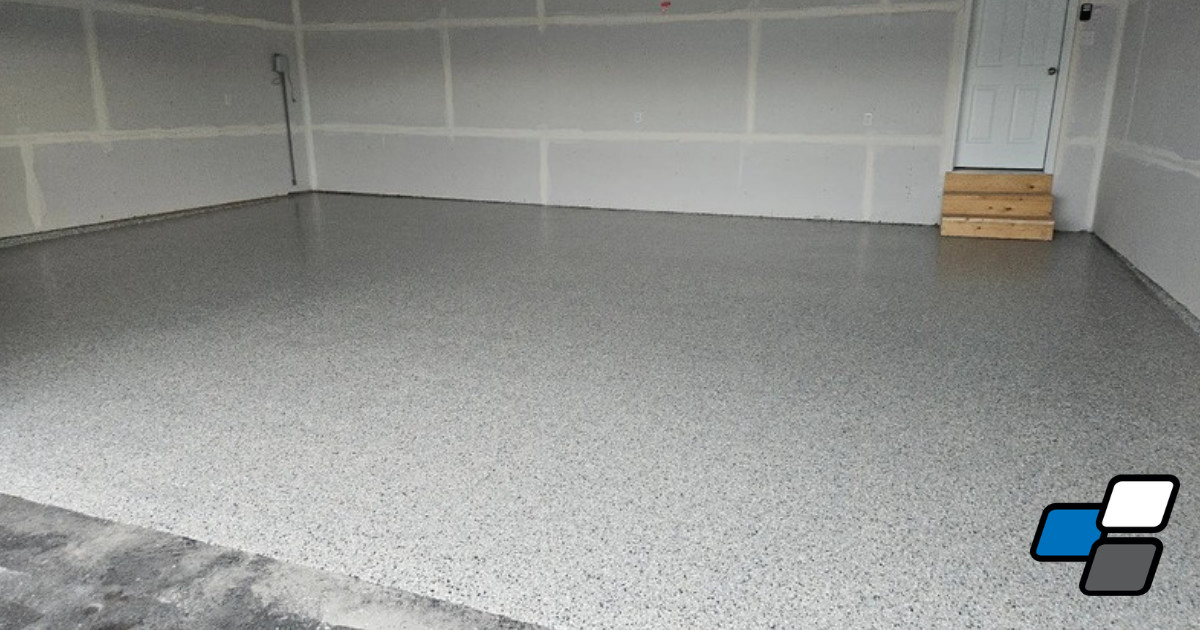
Plan a garage floor coating before winter Minnesota storms arrive. Late summer or early fall gives the slab a sealed surface before the first salt truck rolls. Fall is the sweet spot. The concrete is dry, the weather is mild and the coating has time to cure before slush shows up. Drews Industries installs garage floor coatings across the Twin Cities from our shop in Delano.
Most people think about the garage floor in March. That is when the salt stains, pitting and white crust look their worst. By then the damage is done for the year. This guide explains why fall booking makes sense, what happens on install day and how to get the most from a new floor once the snow starts.
Winter is hard on bare concrete. Our garage page explains that outdoor slabs freeze and thaw a few dozen times each winter. A heated or sunny garage can cycle almost every day. Each cycle pushes water deeper into the pores.
Salt makes it worse. Road salt keeps the slab wet longer and carries chloride into the surface. Then the next freeze pops off tiny flakes of concrete. Over a few seasons, those flakes turn into pits and scaling.
A coating puts a sealed layer between the slab and all of that. Meltwater sits on top. Salt stays on top too. You squeegee it out the door instead of letting it soak in.
Timing matters because the floor needs to be done before the mess starts. Book in summer or early fall and the work happens while the weather is calm. Wait until the first snow and you may be parking on bare concrete until spring.
Fall moves fast here. The Minnesota DNR lists the median date for the first fall 32 degree temperature in the metro area as October 9 to 12. Northern Minnesota sees it about two weeks sooner.
That date is a useful marker. Once nights drop below freezing, cities start pre treating roads. Salt rides into the garage on tires and wheel wells soon after.
Our process page notes that lead times vary by season. Fall is a busy stretch because everyone has the same idea. Calling in August or September gives you the best shot at a date before the cold sets in.
Here is a simple rule. If you can see leaves turning, it is time to call. If you can see snow, you may wait until spring.
Most garages take one or two days on site. Day one covers grinding, patching and the base layers. The topcoat follows once the base cures.
First, the crew protects the space. Walls and shelving get wrapped in plastic. Then we grind the slab with grinders tied to HEPA vacuums. Grinding removes weak surface paste, old sealer, tire marks and loose paint. It also opens the pores so the primer can grab.
Next comes repair. Cracks, pits and spalled spots get filled. A coating cannot fix a heaved or broken slab, and we will tell you if yours needs more than patching.
Then the system goes down. Our garage system has three layers. A polyurea primer locks onto the ground slab. A base coat holds the decorative chip blend you pick. We broadcast chips by hand until the gray concrete disappears. After it cures, we scrape and vacuum the loose chips. A clear, UV stable polyaspartic topcoat seals it all.
Every coating needs an empty floor. That is the hardest part for many families, and it is easier in fall than in December.
Start a week ahead. Sort what you keep, donate and toss. Move bikes, tools and bins to a shed, basement or driveway. Fall weather makes this easy. Nobody wants to haul totes through a snowbank.
Short on space? Ask about an optional 8 by 20 foot lockable storage unit, billed as an add on. It sits in the driveway and keeps your things locked up while the crew works.
Plan where the cars will go too. Many metro cities ban street parking after a snowfall until plows clear the street curb to curb. A fall install avoids that headache.
Patience pays off here. Light foot traffic is fine about 24 hours after the topcoat goes down. Vehicles wait a few more days. Your crew lead gives you the exact date for your floor.
Why the wait? A coating keeps hardening after it looks dry. Hot tires, heavy cars and turning wheels put real stress on a young surface. Giving it time protects the bond you paid for.
Fall scheduling gives you room for that wait. In October, parking in the driveway for a few days is no big deal. In January, it means scraping ice off the windshield every morning. Plan the install when a short driveway stretch feels easy, not painful.
A little homework speeds up install day. Walk the garage and note any cracks, damp corners or spots where water pools. Point them out during the free estimate. Our estimator checks the slab, talks through how you use the space and reviews finish options with you.
Check the drains and gutters too. Water pouring off the roof near the door ends up on the floor. Fixing that before winter helps any floor, coated or not.
Think about traction. We can add fine grit to the topcoat near the house door or on steps. That spot sees the most wet boots, so a little extra grip goes a long way.
Finally, pick your chip blend early. Color choices take time for some families. Deciding before the crew arrives keeps the schedule on track. Need a lighter option for a driveway or walk? A clean and seal treatment protects bare concrete for less.
A coated floor makes winter cleanup simple. Push slush out with a floor squeegee after storms. Rinse the salt film every few weeks. Use a soft broom for sand and grit.
Salt also harms lakes and streams. The Minnesota Pollution Control Agency says one teaspoon of salt can permanently pollute five gallons of water. Squeegeeing meltwater out and sweeping up dried salt keeps more of it out of drains.
Do not use metal shovel blades on the coating. A plastic blade or a rubber squeegee does the job without scratching. Floor mats near the door catch the worst of the grit.
Our garage floors come with a lifetime coating warranty while you own the home. If a problem traces back to the install or materials, we fix it at no cost to you. You head into the cold months covered.
Our crews coat garages across the west and north metro. Homeowners in Plymouth with big three stall garages can book a fall install before the salt starts. Maple Grove families can pick a lighter chip blend that hides salt stains. In Blaine, a newer slab makes a great base for a fall install.
Our shop is in Delano, which makes the west metro home turf. We also serve Minneapolis, St. Paul and the rest of the Twin Cities. If you want to read more about how a coating handles the cold, our guide on garage floors built for the Minnesota deep freeze goes deeper.
Book in summer or early fall. The metro area sees its first freeze around mid October, and salt use starts soon after. Calling in August or September gives the best shot at an install date while the slab is dry and the weather is mild. Lead times vary by season.
Most garages take one or two days on site. Day one covers grinding, patching and the base layers. The topcoat follows once the base cures. Light foot traffic is fine after about 24 hours, and vehicles wait a few more days until your crew lead gives the date.
In most cases, yes. We grind the slab to remove weak surface paste and old coatings, then fill pits, cracks and spalled spots. Heaved or broken slabs are different. If the concrete needs more than patching, we will tell you during the free estimate before you commit.
The floor must be empty. Move items to a shed, basement or driveway ahead of time. An optional 8 by 20 foot lockable unit is available as a paid add on. It sits in your driveway and keeps everything locked and dry while the crew works on the floor.
Push slush out with a floor squeegee after each storm. Rinse the salt film every few weeks. Use a soft broom for sand and grit, and use plastic shovel blades instead of metal. Floor mats near the house door catch the worst of the mess.
Yes. Drews Industries garage floors come with a lifetime coating warranty while you own the home. If a failure traces back to the install or materials, we fix it at no cost to you. Your estimate and walkthrough cover what the warranty includes in plain terms.
Winter does not wait. Neither should your garage floor. A fall install means you face the first storm with a sealed, easy to clean surface instead of bare concrete.
Learn more about our garage floor coating services, then request your free garage floor quote. A garage floor coating before winter Minnesota families book early is one less thing to worry about when the snow flies.