
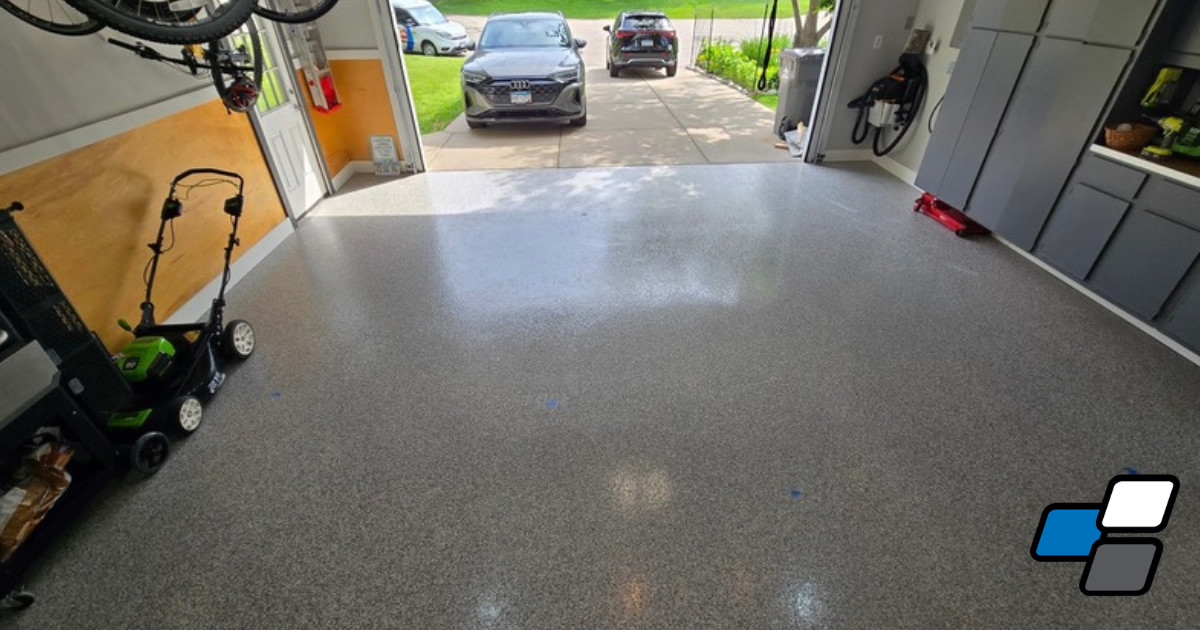
A garage floor coating Plymouth MN homeowners trust is built in layers on a ground slab, with a polyurea primer, a chip base and a clear polyaspartic topcoat. That system handles hot tires, oil drips and the salt that rides in all winter. Our crews coat garage floors all over the west metro, a short drive from our Delano shop.
Plymouth and Minnetonka garages work hard. They park two or three cars every night. They hold bikes, mowers, snowblowers and hockey gear. Many double as a workshop or a home gym. A bare concrete floor wears out fast under that load. A coated floor keeps up.
Plymouth has strict street parking rules. The city does not allow on street parking between 2 and 5 a.m. year round. In winter, parking is also banned after a 2 inch snowfall until crews plow the street curb to curb.
That means cars live in the garage. Every night, every season. Wet tires, salty wheel wells and dripping undercarriages all land on the same slab.
Many Minnetonka homes sit on wooded lots with long driveways. Cars track in sand, leaves and grit on the way up. The garage floor catches all of it.
A sealed coating turns that daily mess into a quick sweep. Nothing soaks in. Nothing stains for good.
Plenty of older cars leak a little. Oil, coolant and brake fluid drip onto the floor and soak into bare concrete. Those dark spots never fully come out.
They also cause trouble later. Oil in the pores keeps a new coating from bonding. That is one reason we grind every slab instead of just washing it.
On a coated floor, drips sit on top. Wipe them with a rag and they are gone. That matters for the environment too. The EPA notes that used oil from one oil change can contaminate one million gallons of fresh water. Catching drips on a sealed floor keeps them out of the storm drain.
Plan on a day or two with our crew at the house. Here is the order of work.
Plastic goes up over walls, shelves and anything that stays in the bays. A diamond grinder hooked to a HEPA vacuum then takes the top skin off the concrete, along with tire tracks, worn sealer and flaking paint. The rough, open surface it leaves behind is what the primer needs.
Cracks and small craters get patched after that. Old paint must come off completely. New layers cannot bond over it, so we check for paint during the estimate and include removal in your price.
Three layers follow. The polyurea primer bites into the fresh concrete. A colored base coat catches the chips, which we throw by hand until no gray shows through. Once that layer sets, the crew knocks off loose flakes, vacuums and rolls on a clear polyaspartic topcoat that resists sun.
Walking is fine the next day. Parking waits a few days longer, on the date your crew lead sets.
Some floors tell you they are ready for a change. Look for these signs.
Dusty concrete is the first. Sweep the floor, and if gray powder keeps coming up, the top layer is breaking down.
Pitting and flaking come next. Small craters near the door or under the wheel wells mean salt and freeze and thaw are eating the surface.
Peeling paint is a third. Some homes come with a painted garage floor from a past owner. Hot tires lift that paint in strips, and it looks worse every year.
Stains that never leave round out the list. Rust, oil and fertilizer marks soak deep into bare concrete and stay there no matter how hard you scrub.
If you see two or more of these, the slab is a good candidate for grinding and a full coating. Waiting only lets the damage spread, since every winter adds more salt, more water and more freeze and thaw to a surface that already has open pores.
The chip blend sets the look of the whole floor. Our decorative chip collections cover everything from cool grays to warm browns.
Steelcut is a darker blend that hides tire marks and oil shadows. Brickyard and Stonycreek bring warmer tones that pair well with brick or cedar homes. Our Marble Collection has softer, stone like blends for a cleaner look.
Think about what you park and store. A dark car leaves lighter salt marks. A light blend hides dust but shows tire scuffs. Mid tone blends split the difference and hide the most.
Bring a cabinet door or a paint chip to the estimate if you plan to add storage. Matching the floor to the cabinets makes the garage feel finished.
Many Plymouth and Minnetonka garages pull double duty. Woodworkers want a floor that sweeps clean. Lifters want grip under a rack. Coated floors handle both.
Chip texture adds grip when the floor is wet or dusty. For steps into the house or a spot where you lift, we can add fine grit to the topcoat for extra traction.
Rubber mats under squat racks and heavy machines spread the load. They protect the coating and keep weights from bouncing.
If you plan to add cabinets, slat walls or overhead racks, do it after the coating cures. That way the floor runs wall to wall with no seams hiding behind storage. Leave a small gap under base cabinets or set them on adjustable feet. That makes it easy to mop under them and keeps water from sitting against the wood.
Winter care is easy. Push slush out the door with a floor squeegee after storms. Hose off the white salt haze two or three times a month. A soft broom handles sand.
In summer, a hose and a mild cleaner keep the floor bright. Wipe oil drips as you see them. Use plastic or rubber shovel blades near the garage. Metal edges can scratch any finish.
Every Drews garage floor carries a lifetime coating warranty for as long as the house is yours. Install or material failures get fixed free.
Want lighter protection for the driveway outside? A clean and seal treatment protects bare concrete and costs far less than a full coating.
Our crews know the west metro well. In Plymouth, three stall garages, tuck under garages and detached shops can all be coated. Minnetonka homes range from older ramblers to large new builds. Newer slabs in Maple Grove make a great base.
Live farther west? Our post on garage floor coatings for Delano and Maple Grove covers the area around our shop.
Price depends on garage size, slab condition and the finish you pick. We give a free written estimate after checking the floor in person. The estimate includes grinding, crack repair and any old paint removal, so there are no surprise add ons when the crew shows up on install day.
Expect our crew at your home for a day or two. The first day handles grinding, crack repair and the first layers, and the clear topcoat follows after they cure. Light foot traffic is fine after about 24 hours, and cars wait a few more days until your crew lead gives the date.
Not when the slab is prepped right. We grind the concrete to remove stained surface paste, old sealer and tire marks before the primer goes down. Grinding opens the pores so the polyurea primer bonds into clean concrete. Deep stains get extra attention during prep.
Mid tone blends hide the most dirt, salt and tire marks. Steelcut is a darker blend, while Brickyard and Stonycreek add warmer tones. Very dark blends show white salt film, and very light blends show tire scuffs. See your top picks in person before deciding.
Yes. The chip texture adds grip, and the topcoat resists sweat and spills. Use rubber mats under racks and heavy machines to spread the load. We can add fine grit to the topcoat in any spot where you lift or step into the house for more traction.
Yes. Our garage floors carry a lifetime coating warranty while you own the home. If a failure traces back to the install or the materials, we fix it at no cost to you. The estimate and walkthrough explain the coverage in plain terms before you sign.
Your garage parks the cars, stores the gear and greets you every night. It deserves a floor that keeps up with all of it.
Check out our garage coating options and book a free garage floor quote. A garage floor coating Plymouth MN families install today handles every season that follows.